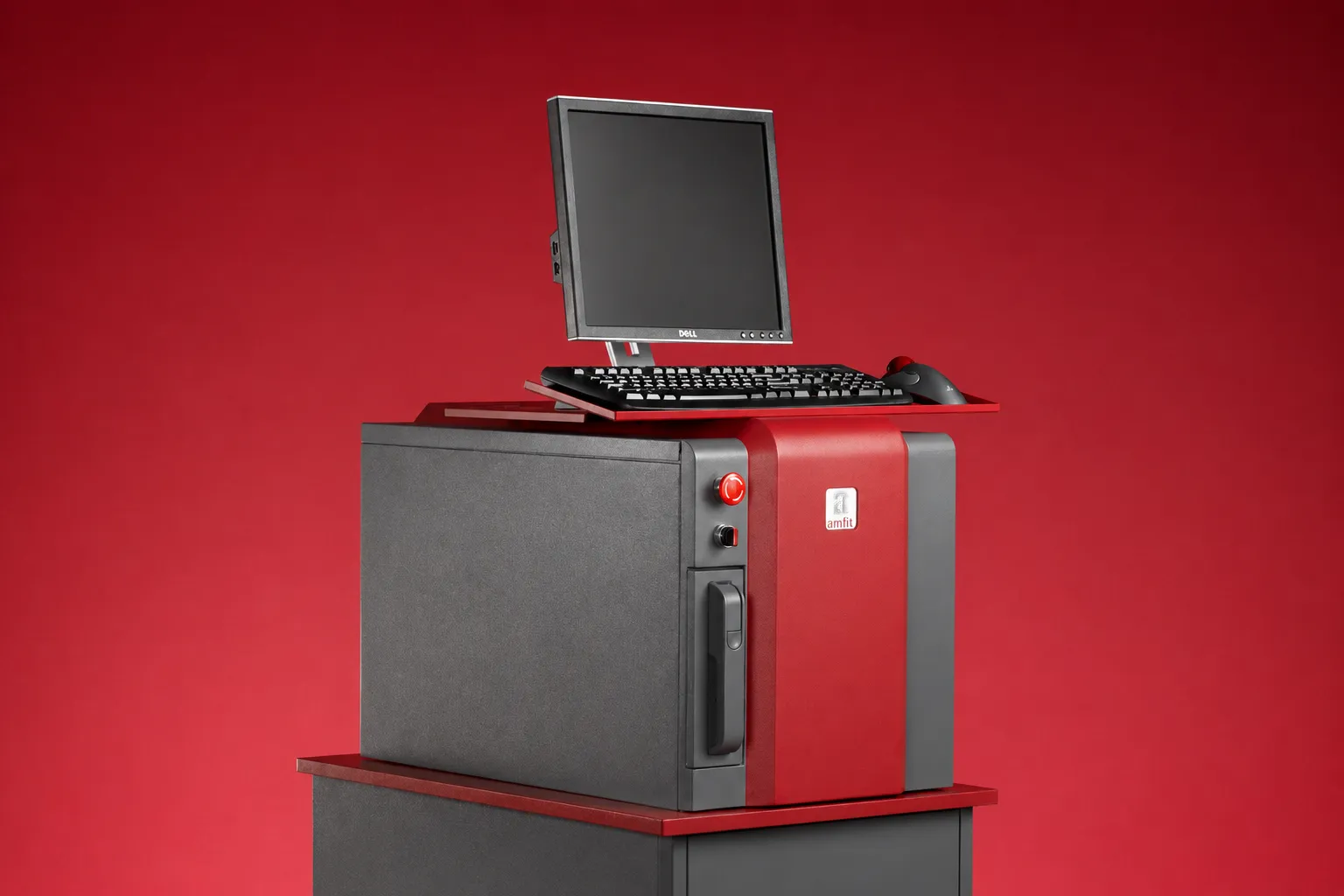
Patients don't want to come back. They never have. The two-visit orthotic workflow, cast today, fit in two weeks, has been the norm for so long that most practices stopped questioning it. But when you put a CAD/CAM mill in the clinic and compress the whole process into a single appointment, something interesting happens: the patient experience changes so much that the clinical and business outcomes change with it.
This post is about what actually happens when a practice switches from traditional outsourced fabrication to same-day in-clinic milling, the workflow, the numbers, and the things that are harder to quantify but just as important.
The traditional workflow
Here's what the old model looks like from the patient's point of view:
- Visit 1 (biomechanical exam & casting): 45 – 60 minutes. Patient is examined, casted or scanned, prescribed an orthotic. Pays a deposit. Leaves.
- Wait: 10 – 21 days. Patient lives with the pain they came in for, occasionally calling to ask when the orthotics will arrive.
- Visit 2 (fit): 20 – 30 minutes. Clinician checks fit, makes minor adjustments, dispenses the device. Hands the patient an instruction sheet.
- Follow-up visit (maybe): Often skipped. Patient either loves the orthotic or quietly puts it in a drawer.
From a clinical standpoint this is fine. From a patient-experience standpoint, it's the friction point every practice complains about.
What patients actually feel during a two-week wait
They feel two things: pain and regret. The pain is obvious, they came in because their feet hurt, and the fix is sitting in a FedEx truck somewhere. The regret is the quieter one. Patients who've paid $300 – $600 out-of-pocket for something they can't yet use are, on average, less enthusiastic about the purchase by day 10 than they were on day 1. Buyer's remorse is real, and it shows up in cancel-and-refund requests, no-shows on fit visits, and negative reviews.
The moment a patient walks out with a finished custom orthotic the same day they came in, the entire dynamic of the visit changes. They went from skeptical consumer to evangelist in 45 minutes.
The same-day workflow
Now compare that to what happens when you have a scanner, editing software, and a CAD/CAM mill in the clinic:
- Scan (5 minutes): Patient steps onto the scanner, scan is captured in seconds, clinician checks the digital cast for obvious artifacts and re-scans if needed.
- Review & design (10 minutes): Clinician opens the scan in the editing software, adds posts, skives, metatarsal pads, cut-outs, whatever the exam called for. Patient can watch the screen and ask questions.
- Mill (10 – 15 minutes): Design sent to the mill. Machine carves the orthotic from an EVA blank while the patient waits in the exam room or walks the hallway.
- Fit (5 – 10 minutes): Clinician fits the device into the shoe, checks comfort, makes any final hand adjustments, dispenses.
Total chair time: roughly 35 – 45 minutes, including the mill cycle. That's about the same as a traditional casting visit alone, except now the patient leaves with a finished orthotic instead of a promise.
What changes in the patient experience
Immediate feedback
The patient can walk in their new orthotic while you're still in the room. If something feels off, you can re-fit, reheat the top cover, tweak a post, or even re-mill a new pair on the spot. You're not guessing whether the device will be comfortable two weeks from now, you know within the hour.
Trust gets built in a single visit
When a patient sees their foot on a screen, watches you adjust the design, and then sees a machine carve the device from a block of EVA while they're sitting there, they understand what they're paying for. Orthotics stop being a black box and start being a visible, bespoke thing made for them. That understanding is worth more than any marketing copy you could write.
No second appointment
The cancellation-and-no-show rate on fit appointments is one of the quiet killers of traditional orthotic workflow. Eliminate the fit appointment and you eliminate the problem. Every completed case becomes a closed loop.
Clinical advantages
Beyond patient experience, same-day fabrication opens up clinical possibilities that just aren't available in a two-week workflow:
- Real-time gait check: Patient walks in the device while you watch. You can re-post, re-mill, and re-fit in the same visit if needed.
- Adjustments on the same day: A minor hot-spot at the 5th metatarsal head? Cut a relief, or mill a new shell with the adjustment built in. Traditional workflow: ship back, wait, re-fit.
- Iterate on difficult cases: Charcot, severe pronation, limb-length discrepancy, complex cases that would normally require multiple shipping cycles can be dialed in on one visit.
- Follow-up within the visit: Build a 10-minute walk-test into the protocol. You catch problems before the patient goes home with a device that hurts.
Practice advantages
Recovered chair time
Eliminating the fit appointment gives you back roughly 20 – 30 minutes per orthotic patient. Across a month of 40 – 60 orthotic cases, that's 15 – 30 hours of additional billable time, more than enough to justify the mill.
Referral loop shortens
Patients who love something tell three people within 48 hours. Patients who love something they bought three weeks ago tell nobody, because the enthusiasm has faded. Same-day delivery catches the patient at peak enthusiasm and turns them into an active referral source.
Cash-pay patients convert more readily
Retail and cash-pay orthotic customers are making a decision in the moment. A practice that can scan, design, and deliver in one visit converts more of them than one that asks for a deposit and a return trip.
Higher revenue per visit
Traditional model: 2 visits, split revenue across both. Same-day model: 1 visit, all revenue at once. Bookkeeping is cleaner, collections are faster, and AR aging on orthotic cases essentially disappears.
The technology stack that makes it possible
For a same-day workflow to work, four pieces have to come together in one clinic:
- A fast, reliable scanner, capturing a usable digital cast in seconds, not minutes
- Clinical editing software, a CAD tool built for foot orthotics, not generic 3D modeling, so a clinician (not an engineer) can design a device in 10 minutes
- A benchtop CAD/CAM mill, quiet enough for a clinical setting, fast enough to carve a device while the patient waits, and flexible enough to handle EVA, cork-EVA, and composite blanks
- Medical-grade EVA blanks, pre-cut, multi-density, shelf-stable, and easy to re-order
Any one of those pieces missing and the workflow breaks. A great scanner with no mill means you still ship the file out. A great mill with bad software means your designs take an hour, not ten minutes. The whole stack has to work together, which is why practices that try to cobble together same-day fabrication from multiple vendors usually end up frustrated.
Implementation notes
If you're seriously considering the switch, here's what practices that have made it successfully have in common:
- One owner for the workflow. A tech, pedorthist, or mid-level clinician who owns scanning, editing, and milling. Not a committee.
- A dedicated space. 30 – 60 square feet with ventilation, a bench, and power. Doesn't have to be pretty, just dedicated.
- An initial volume commitment. Budget for 30 – 50 "learning" orthotics in the first two months. The process will be slower at first.
- A standard protocol. Write down the step-by-step workflow so every scan-to-fit follows the same sequence. Consistency is what makes the time budget hold up.
- Same-day marketing. Once the workflow works, tell patients about it. "Custom orthotics, fitted and delivered in one visit" is the kind of promise that turns into referrals on its own.
Bottom line
Same-day orthotic fabrication isn't just a convenience improvement. It changes the economics of your practice, the clinical quality of the fit, and the patient's relationship to the orthotic they're buying. For practices with the volume and the space to support it, in-clinic milling is the single largest workflow upgrade available, and the one that patients notice the most.
The best way to understand it is to see it happen. Book a demo, watch a scan go into the editing software and come out of the mill fifteen minutes later, and it will be immediately obvious why the practices that have made this switch don't ever go back.
Related: Amfit In-House Milling solution overview · Run the in-house ROI on your own volume · The Real ROI of In-House Orthotic Fabrication (with math).