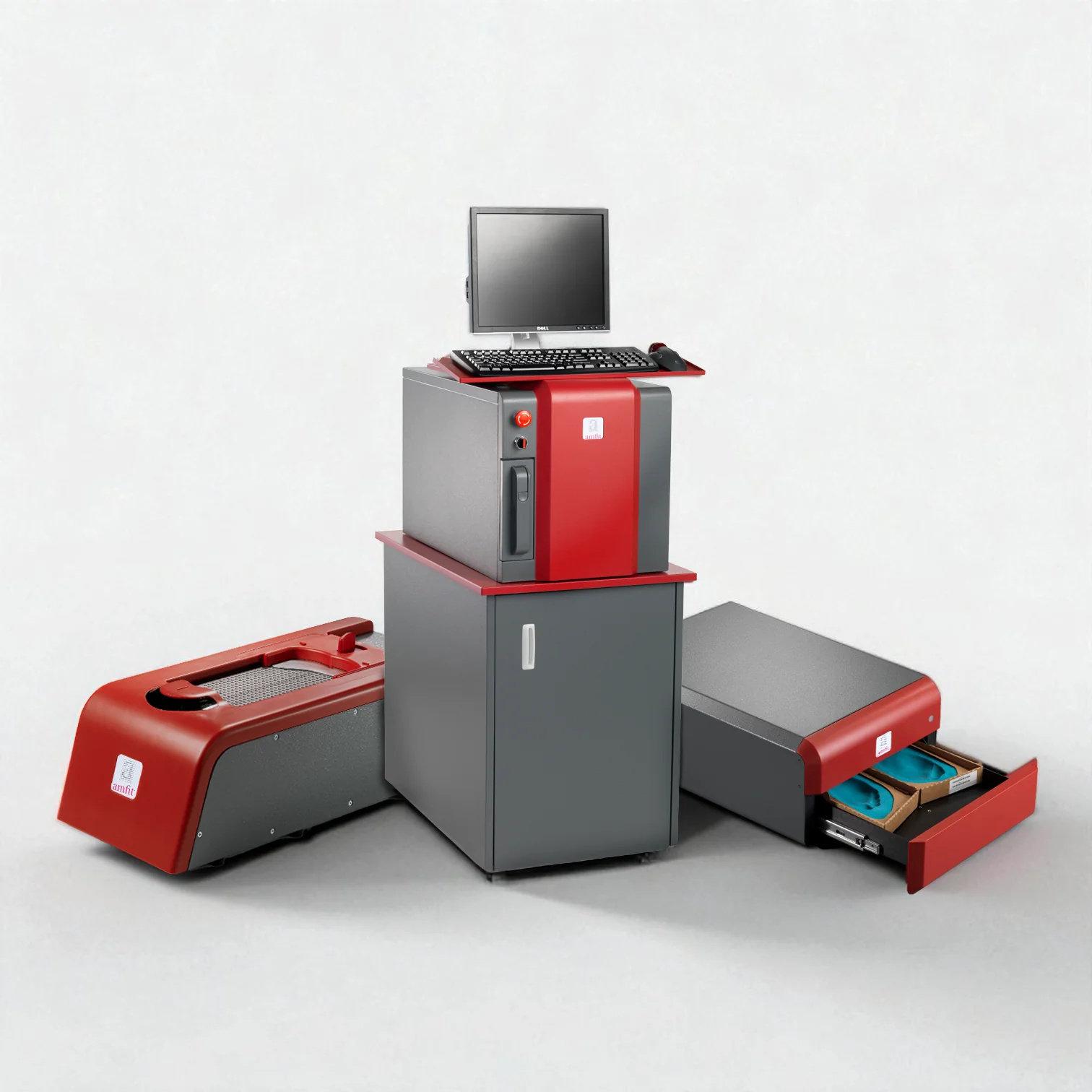
Amfit gives providers more than one way to bring custom orthotics into their practice. A foot may be scanned directly, captured in foam and digitized, or submitted through Amfit Scan. The completed design then follows the fabrication path that fits the practice: production in-house or through Amfit Central Fabrication.
Both paths begin with the same digital foundation. The scan, provider recommendations, design changes, material choices, and order details stay together from assessment through fabrication. That continuity supports accurate production, future adjustments, and repeat orders without rebuilding the record from the beginning.
This flexibility allows clinical and retail providers to choose the capture and fabrication process that fits their setting while maintaining control of the design and a clear history of every orthotic.
In-Office Assessment
The first stage in either workflow is an in-office assessment. Whether the orthotic is being provided in a medical or retail setting, the provider reviews the foot and footwear, considers the person’s activity, and identifies the goal for the orthotic.
In a medical setting, the diagnosis, prescription, relevant history, and assessment findings may also guide the order. Together, this review shapes the choices that follow, including the position of the foot during scanning, the amount of load used, the orthotic style, the material, and the top cover. Any recommendations or fabrication notes are added to the order.
Bringing the Foot Into the Digital Workflow
The provider may scan the foot directly with the Amfit Contact Digitizer, capture it in foam and convert the impression with the Impress Scanner, or submit it through Amfit Scan.
Each route creates a digital foot record that enters the same design process. The differences between these methods are covered in Digital Foot Capture vs. Traditional Casting.
The scan is saved with the assessment findings, provider recommendations, and order details. Together, they provide the measurement of the foot and the direction needed to begin the orthotic design.
Reviewing and Designing the Orthotic
The scan opens in Correct and Confirm, Amfit’s orthotic-design software. There, the captured plantar surface appears as a three-dimensional model alongside the information collected during the assessment.
The provider or Amfit Central Fabrication team reviews the right and left feet, confirms the recorded position, and works from the prescription, provider recommendations, intended footwear, and goal for the orthotic.
Using that direction, the design takes shape. The arch, heel cup, forefoot, thickness, posting, accommodations, and reliefs are adjusted directly on screen. Each change remains visible, allowing the complete design to be reviewed before fabrication begins.
Correct and Confirm also preserves design work that providers use frequently. A custom-designed shape may be saved in the Library of Shapes and applied to future scans. The software scales the saved shape to the new foot, reducing repeated design work while keeping each orthotic specific to the individual scan.
Moving Into Fabrication
Once the design is complete, the patient or customer record transfers from the scanning system to the Amfit CAD/CAM Mill through a saved file, direct wired connection, or Amfit Data Services.
Correct and Confirm is available on both the scanning and milling systems, so the completed design opens at the mill without being redrawn or entered again.
From this point, the workflow follows either Amfit Central Fabrication or the provider’s in-house process.
Central Fabrication
With Amfit Central Fabrication, Amfit receives the completed design and order details, then carries the orthotic through production, finishing, final review, and shipping.
At the mill, the selected blank is carved according to the full three-dimensional design. This includes the plantar contour, arch profile, heel cup, thickness, posting, accommodations, and reliefs created in Correct and Confirm.
After milling, sanding smooths the surface, refines the edges, and prepares the orthotic for top-cover application.
Before the top cover is applied, the orthotic goes through a quality review. The fabrication team confirms the material, dimensions, requested features, and surface quality against the submitted order.
The specified top cover is then applied. Its material and thickness reflect the prescription or requested use, intended footwear, and the cushioning, durability, or protection needed for the order.
Once the top cover is in place, the completed pair receives a final quality review before it is packaged and shipped to the provider.
In-House Fabrication
With an in-house Amfit system, the same completed record opens at the provider’s mill.
The selected blank is carved according to the design created in Correct and Confirm. The provider’s team then sands the orthotic, applies the selected top cover, and reviews the finished pair before fitting or dispensing it.
Keeping fabrication on site gives the team direct control over production, finishing, design changes, and turnaround while following the same digital process used for Amfit Central Fabrication.
Where the Record Is Stored
Where the record is stored depends on the fabrication path.
For Central Fabrication orders, the scan, completed design, notes, and order details are stored in the Amfit Cloud.
In-house users may store records locally through Correct and Confirm on the system computer. Practices that want cloud backup or access between connected locations may also subscribe to Amfit Data Services.
The original scan remains available while revised designs are saved as separate records. This preserves the starting point and the history of changes without overwriting previous work.
Adjustments and Repeat Orders
When another pair or an adjustment is needed, the provider returns to the previous record rather than beginning without context.
The scan, design changes, material, top cover, and order notes show what was previously made. When the design remains appropriate, it supports a repeat order. When the person’s needs, footwear, or provider recommendations have changed, the existing record provides a clear starting point for the next version.
The provider still determines whether a new assessment or scan is needed. The saved record keeps the history of the orthotic available for that decision.
A Workflow Built Around the Provider
Amfit does not require every provider to follow the same fabrication path. The workflow supports different capture methods, clinical and retail settings, in-house production, and Central Fabrication.
That is the value of the Amfit workflow: flexibility in how the foot is captured and where the orthotic is made, with one digital record supporting design, fabrication, future adjustments, and repeat orders.